Deep Roots, New Growth

Honouring the flow of winter & the water element to Spring & the wood element, Tamarama Beach, Sydney, Australia.
Moving from Winter’s Water Element into Spring’s Wood Element Through Yin Yoga & Seasonal Wellness
There is something incredibly powerful about the space between seasons.
We often think of the seasons as distinct chapters — winter ends, spring begins — but nature doesn’t work quite so abruptly.
The light begins to change. The mornings soften. The days gradually stretch longer. Tiny buds appear on branches that looked completely dormant only weeks before.
Before we see new growth above the earth, an enormous amount has already been happening beneath it.
And perhaps we are not so different.
As we move from winter into spring, Traditional Chinese Medicine offers us a beautiful framework for understanding this transition: we journey from the deep, inward energy of the Water Element into the rising, expansive energy of Wood.
From rest to renewal.
From stillness to movement.
From deep roots to new growth.
🌊 WINTER: THE WATER ELEMENT
In Traditional Chinese Medicine’s Five Element system, winter is associated with the Water Element.
Water represents our deepest reserves.
It is connected symbolically with stillness, introspection, wisdom, adaptability and our ability to conserve our resources.
Think about what happens in nature during winter.
Trees lose their leaves. Growth above ground slows. Animals retreat. Seeds lie dormant beneath the earth.
Very little may appear to be happening — yet life hasn’t stopped.
Energy has simply moved inward and downward.
This is one of winter’s greatest lessons.
Not every season of life needs to be productive.
Sometimes our most important work happens quietly beneath the surface.
Water: Kidney + Bladder
Within the traditional Five Element framework, Water is associated with the:
Yin organ: Kidney
Yang organ: Bladder
When we speak about the Kidney or Bladder in this context, we’re talking about their roles within the traditional energetic framework of Chinese medicine — not simply the anatomical kidneys and bladder understood by Western medicine.
Energetically, the Kidney system is traditionally associated with our deeper reserves, constitution, willpower and essence.
The Bladder channel travels extensively along the back body and is often explored in Yin Yoga through forward folds and shapes that gently lengthen the posterior chain.
This makes winter a beautiful time for practices that invite us to slow down, replenish and listen.
💧 The Emotion of Water: Fear
Every element in Five Element philosophy also has emotional associations.
For Water, one of the primary emotions is fear.
Fear isn’t necessarily something we need to eliminate.
Healthy fear protects us.
It asks us to pay attention.
But when fear becomes excessive, we can feel frozen, depleted, anxious or unable to move forward.
Winter asks:
What am I afraid of?
What am I protecting?
Where am I using energy unnecessarily?
What do I need to trust?
And perhaps most importantly:
What needs to be restored before I move forward?
The invitation isn’t to force ourselves through fear.
It is to create enough internal safety and steadiness that movement can eventually arise naturally.
🌱 AND THEN SPRING ARRIVES…
Eventually, something changes.
The seed that has spent months quietly conserving its energy begins to push towards the light.
Spring is not passive.
It rises.
It expands.
It reaches.
In Five Element philosophy, spring belongs to the Wood Element.
Wood represents growth, direction, vision, flexibility, planning, creativity and purposeful movement.
Imagine a young tree.
It knows where it wants to go — upward towards the light — but it must also remain flexible enough to move with the wind.
This is the medicine of Wood.
Direction without rigidity.
Growth without force.
Strength with flexibility.
🌿 WOOD: LIVER + GALLBLADDER
The Wood Element is traditionally associated with:
Yin organ: Liver
Yang organ: Gallbladder
Again, these are energetic associations within Chinese medicine rather than claims about the biomedical function of the anatomical organs.
The Liver system is traditionally associated with the smooth movement of Qi, vision, planning and our capacity to move forward.
The Gallbladder is associated with decision-making, courage and our ability to choose a direction.
Together they offer a wonderful question for spring:
Where do I want my energy to go?
Winter asked us to conserve.
Spring asks us to direct.
💚 The Emotions of Wood: Anger, Frustration + Assertiveness
The emotion most commonly associated with Wood is anger.
But I don’t think anger needs to be viewed as inherently negative.
Anger can contain enormous information.
It can tell us:
Something needs to change.
This boundary isn’t working.
I’m frustrated.
I’m stuck.
I want something different.
Balanced Wood energy can transform that frustration into clarity, healthy assertiveness, creativity and action.
Instead of exploding or suppressing, we can ask:
What is this emotion trying to move?
Wood reminds us that energy needs somewhere to go.
🌊 WATER NOURISHES WOOD
This is my favourite part of this seasonal transition.
Within the Five Element cycle, Water nourishes Wood.
And nature shows us exactly how.
Without water, there is no new growth.
Our winter rest wasn’t wasted time.
The stillness mattered.
The reflection mattered.
The boundaries mattered.
The sleep mattered.
The uncomfortable emotions mattered.
The things we chose not to do mattered.
Because the quality of our spring growth is influenced by the depth of the roots we tended during winter.
Deep roots. New growth.
Rather than racing into spring with a giant list of goals, perhaps ask:
What have I been quietly cultivating this winter that is now ready to grow?
☯️ YIN YOGA FOR WATER → WOOD
This seasonal transition is one of my favourite times to practise Yin Yoga.
Yin gives us the opportunity to stay with a shape for several minutes rather than constantly moving to the next thing.
It creates space for observation.
Sensation.
Breath.
Emotion.
Stillness.
And importantly — the rebound.
That little pause after a posture where we simply notice.
Traditional Yin Yoga teachings often overlay yoga postures with Chinese medicine’s meridian model. From a physical perspective, Yin Yoga uses relatively passive, longer-held positions that load and lengthen tissues differently from more dynamic forms of yoga.
The meridian interpretation belongs to the traditional energetic framework; it shouldn’t be confused with scientifically established anatomical pathways.
🌊 WATER YIN POSES
As we farewell winter, I love beginning close to the earth and working predominantly through the back body and inner legs.
Caterpillar
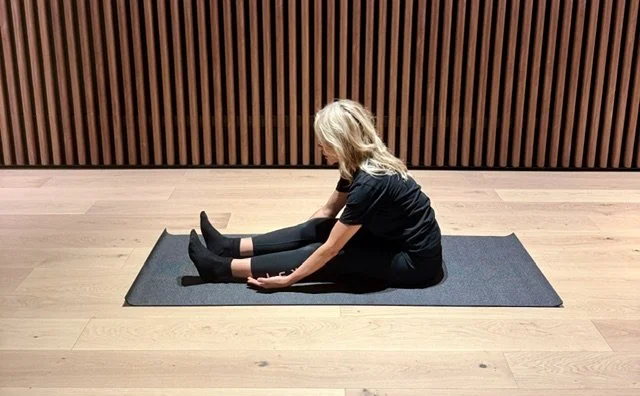
Caterpillar pose with upright head, tilt head and soften.
A seated forward fold with the legs extended.
Allow the spine to soften rather than striving for a perfect straight-backed fold.
Water focus: Bladder channel/back body.
Energetically, this can be a beautiful posture for surrender.
Ask:
What am I ready to stop carrying?
Half Butterfly
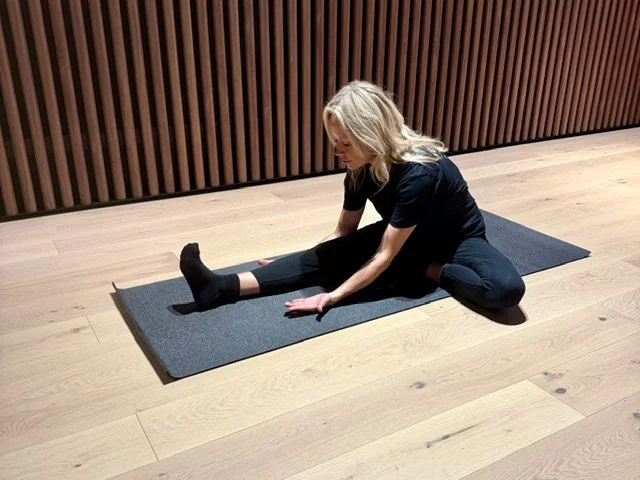
Half Butterfly pose -again, allow the head to soften and hang.
One leg extends while the opposite knee bends.
Fold towards the extended leg and allow gravity to gradually do the work.
This is a gorgeous transitional pose because we begin with the Water qualities of the back body while also introducing the inner legs associated in Yin traditions with channels including Kidney and Liver.
Butterfly
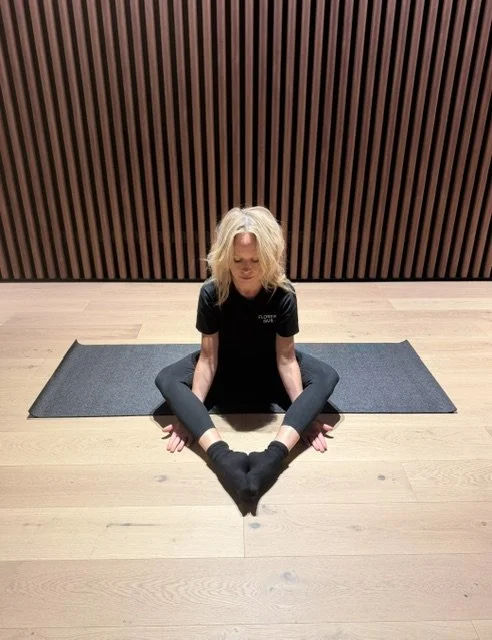
Butterfly Pose set up.
Bring the soles of the feet together and allow the knees to fall outward.
Rather than pulling yourself towards your feet, let the spine round naturally if that feels comfortable.
This is where I like to begin introducing the idea of thawing.
Winter isn’t over.
Spring hasn’t quite arrived.
We are simply creating space.
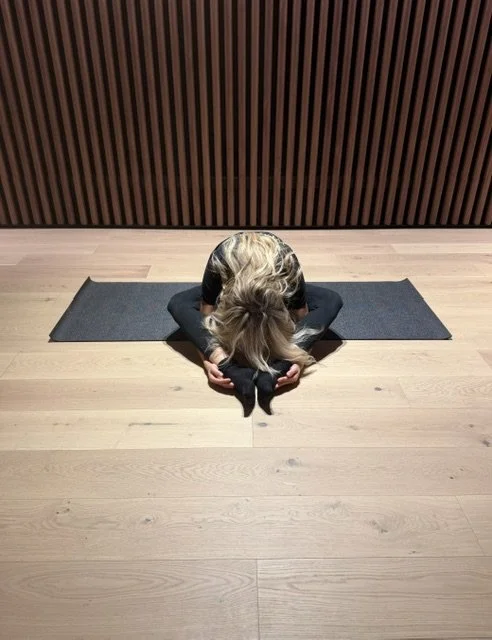
Full Butterfly Pose.
🌿 TRANSITION: DRAGONFLY
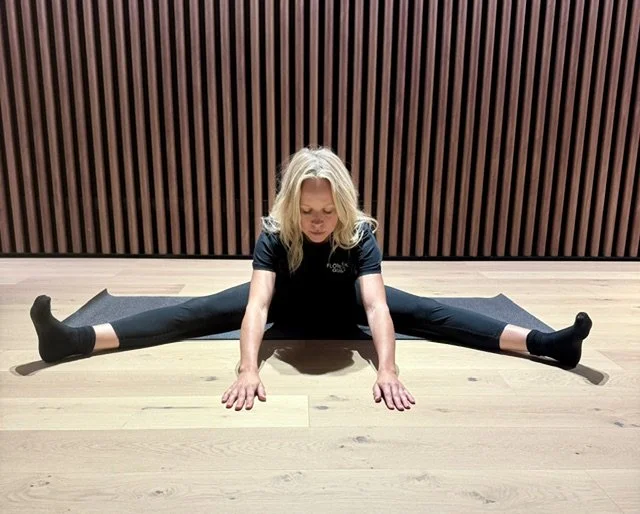
Dragonfly prep, soften arms and allow the head to hang and neck to soften.
Take the legs wide and gently fold forward.
For me, Dragonfly beautifully represents the energetic transition between Water and Wood.
There is still Yin.
Stillness.
Patience.
But suddenly there is more space.
The body begins to expand rather than contract.
This can be a beautiful place to contemplate:
What needs space in my life in order to grow?
🌱 WOOD YIN POSES
As the practice moves towards Wood, I gradually introduce shapes exploring the inner thighs, outer hips and side body.
Sleeping Swan
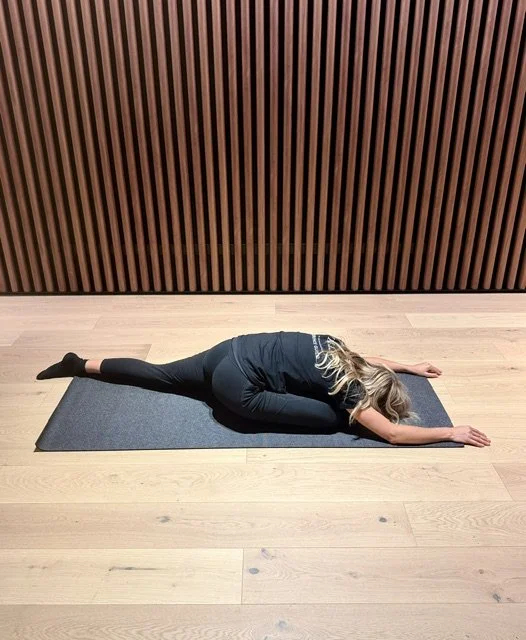
Sleeping Swan Pose
A beautiful Yin variation related to Pigeon.
Rather than chasing depth, support yourself generously with bolsters or blocks.
In Yin’s meridian framework, the outer hip region is often explored in relation to the Gallbladder channel.
This is a beautiful posture for exploring the difference between intensity and force.
Growth does not have to hurt.
Dragon
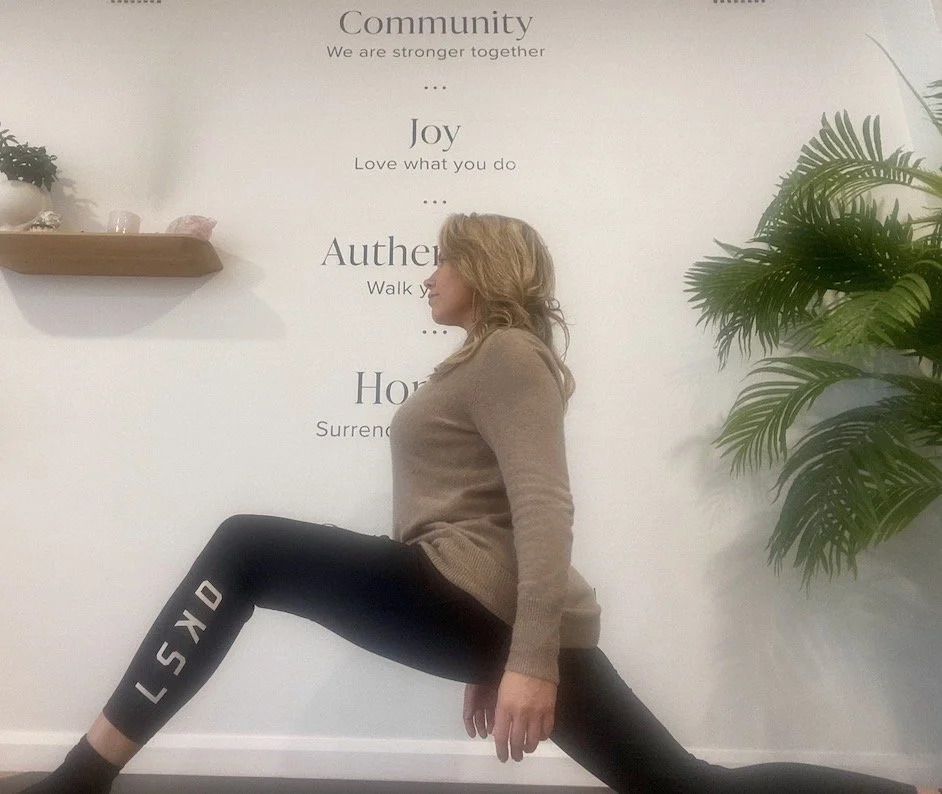
Dragon Pose.
From a low lunge, allow the hips to settle gradually.
There are many Dragon variations, so choose the version appropriate for your body.
I love Dragon for spring because it feels like the first shoot pushing through the earth.
There is direction.
Energy.
Potential.
Yet we remain grounded.
Winged Dragon
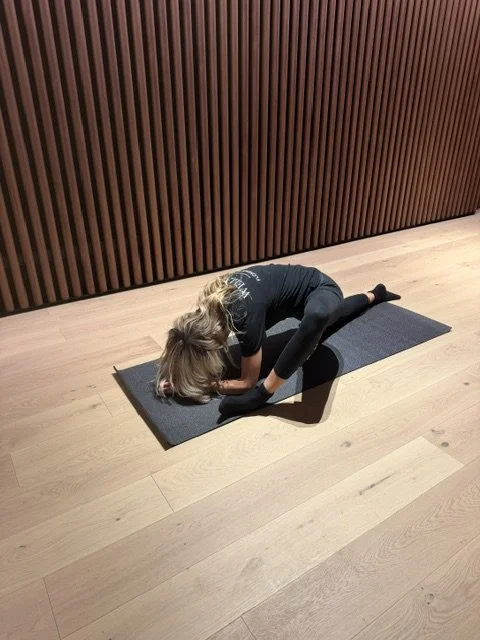
Winged Dragon Pose.
From Dragon, allow the front knee to gently open outward if appropriate for your body.
This brings greater exploration into the hip and groin.
Stay curious rather than ambitious.
Spring invites expansion — not aggression.
Shoelace
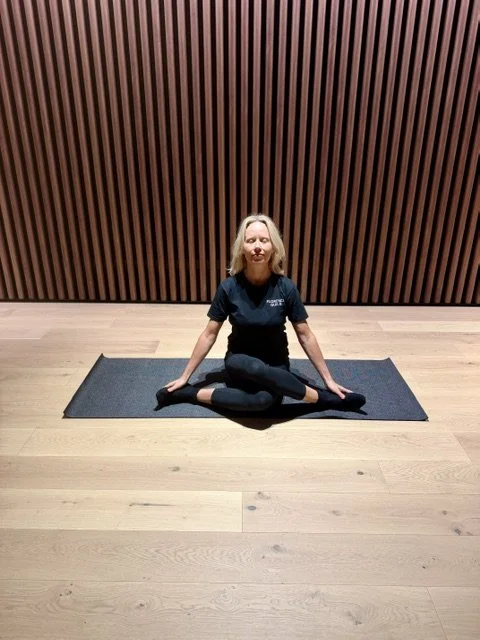
Shoelace Pose.
Stack the knees and allow the feet to move away from the hips, modifying as needed.
Shoelace offers a wonderful exploration of the outer hips and is commonly incorporated into Wood/Gallbladder-inspired Yin sequences.
Add a gentle side bend and suddenly the shape begins to travel upwards through the side body.
Bananasana
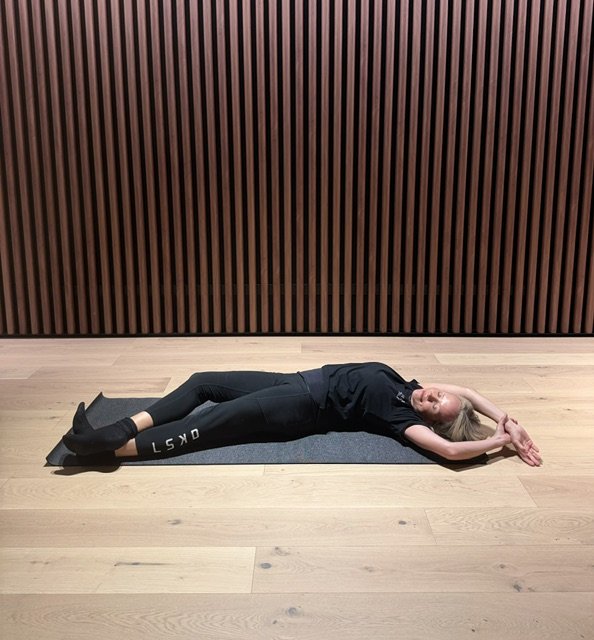
Bananasana.
One of my favourite spring shapes.
Lying on your back, move your feet and upper body gently towards one side, creating a crescent or banana shape.
This opens the lateral body and is often included in Yin practices exploring the Gallbladder pathway.
Energetically, imagine creating room between the ribs.
Room to breathe.
Room to expand.
Room for something new.
Supine Twist

Supine Twist.
Finish with a gentle twist before Savasana.
Rather than trying to wring anything out of yourself, think of this as integration.
Winter and spring don’t need to compete.
We carry the wisdom of one season into the next.
🥣 EATING WITH THE SEASON
Seasonal wellness doesn’t need to mean completely changing your diet overnight.
As winter transitions into spring, I like the same principle I use in yoga:
Don’t jump. Transition.
In colder weather, warm cooked meals can feel grounding and comforting:
soups and broths
stews
roasted root vegetables
whole grains
beans and legumes
mushrooms
warming teas
dark leafy greens
As the weather warms, gradually introduce more of spring’s freshness:
leafy greens
broccoli
asparagus
peas
sprouts
fresh herbs
lightly steamed vegetables
seasonal fruit
citrus
fermented foods if they agree with you
Rather than suddenly abandoning warm winter food for icy smoothies and raw salads, notice what the weather and your body are actually asking for.
Traditional Five Element food philosophy often associates Wood with green foods and sour flavours.
Think lemon, lime, leafy greens and fresh herbs.
These can be beautiful seasonal additions — but food should remain nourishing, enjoyable and appropriate for your individual needs rather than becoming another rigid wellness rule.
🌿 PRACTICES FOR HARMONISING THE WATER → WOOD TRANSITION
1. Keep resting
Spring energy may be rising, but don’t abandon everything winter taught you.
Keep protecting sleep.
Keep creating quiet.
Keep saying no when you need to.
Your roots still need water.
2. Begin moving more
Walk.
Stretch.
Practise yoga.
Dance.
Swim.
Try Qi Gong.
Move because it feels good to inhabit your body — not because you’re punishing it.
3. Spend time outside
Notice the seasonal transition rather than simply reading about it.
Look at the trees.
Feel the temperature.
Notice sunrise and sunset.
Observe what’s flowering.
Nature is one of our greatest teachers of timing.
4. Declutter
Spring cleaning exists for a reason.
Clear a drawer.
Your desk.
Your wardrobe.
Your inbox.
Your calendar.
Ask:
Does this still belong in the season I’m entering?
5. Create a vision
Wood loves direction.
You don’t need a five-year plan.
Simply ask:
What would I love to grow over the next three months?
Choose one or two things.
Give your energy somewhere meaningful to travel.
6. Work consciously with frustration
When irritation arises, instead of immediately reacting, get curious.
What feels blocked?
What boundary needs strengthening?
What conversation needs having?
What decision have you been avoiding?
Sometimes frustration isn’t asking us to calm down.
Sometimes it’s asking us to change direction.
7. Breathe before you bloom
Growth doesn’t need to be rushed.
Take a few minutes each morning for breathing, meditation or simply sitting quietly before entering the noise of the day.
8. Practise Yin
Especially during transitional seasons.
Give yourself somewhere to do absolutely nothing except breathe, feel and listen.
🌱 A WATER → WOOD RITUAL
Find somewhere quiet.
Place one hand over your lower belly and one over your heart.
Take several slow breaths.
Imagine deep, dark water beneath you.
This represents everything winter has taught you.
Your experience.
Your wisdom.
Your rest.
Your resilience.
Your roots.
Now imagine a seed beneath the earth.
With every breath, water nourishes it.
Eventually, the seed begins to open.
A tiny green shoot emerges.
Don’t decide what it needs to become.
Simply ask:
What is ready to grow within me?
Then listen.
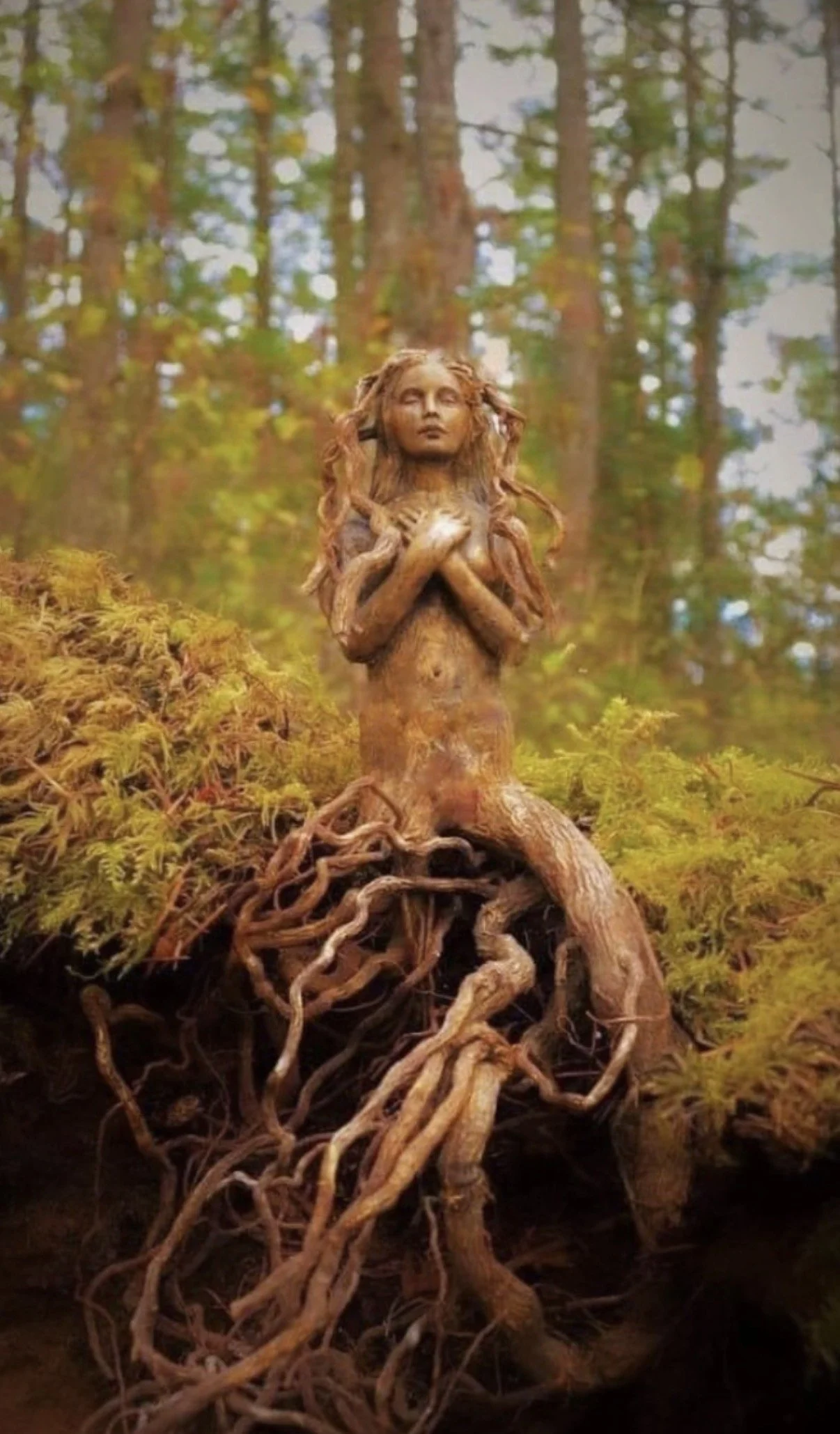
🌿 FINDING YOUR SACRED CENTRE
Deep Roots Before New Growth
As we move from the stillness of winter into the rising energy of spring, there can be a temptation to immediately reach outward.
To do more.
Create more.
Plan more.
Become more.
But before we grow outward, perhaps there is another invitation:
Come back to your centre.
Your Sacred Centre is that steady place within you that remains when the noise, expectations and distractions of the outside world soften.
It is your inner ground.
Your place of discernment.
The place from which authentic growth can begin.
Because a tree doesn’t begin with its branches.
It begins with its roots.
Notice Where You Flinch
One interesting practice during seasonal transitions is simply noticing where you flinch.
A flinch is an instinctive protective response — that tiny moment when the body braces, contracts, pulls away or prepares itself.
Sometimes it’s physical.
Sometimes it’s emotional.
Sometimes we notice ourselves internally flinching at a conversation, a decision, criticism, change, uncertainty or even the possibility of being truly seen.
Rather than immediately judging that response, become curious about it.
What am I protecting here?
What am I afraid might happen?
Is this response keeping me safe — or simply keeping me small?
Is this an old pattern, or does something genuinely need my attention?
This connects beautifully with our transition from Water to Wood.
Water invites us inward — towards stillness, reflection and the traditional emotional theme of fear.
Wood begins to move outward — towards direction, growth, boundaries, expression and action.
But sustainable growth doesn’t mean bulldozing through every fear or overriding the body’s signals.
Sometimes the flinch contains wisdom.
Sometimes it reveals a boundary.
Sometimes it shows us where tenderness remains.
And sometimes it simply shows us the edge of our comfort zone — the place where something new is asking to emerge.
The practice is not necessarily to stop flinching.
The practice is to notice, breathe and return to centre before choosing what comes next.
That pause is powerful.
Instead of automatically reacting, retreating or pushing forward, we find our Sacred Centre and respond from there.
🌊 ROOT • CENTRE • GROW 🌿
A Water-to-Wood Meditation
Find a comfortable position, either seated or lying down.
Close your eyes.
Allow your breathing to become slower without forcing it.
Feel the weight of your body supported by the earth beneath you.
ROOT
Bring your awareness down towards the base of your body.
Imagine roots extending beneath you into dark, fertile winter earth.
Nothing needs to happen yet.
You don’t need to bloom.
You don’t need to know what’s next.
Simply allow yourself to be held.
Imagine the Water Element moving deep beneath those roots — nourishing everything quietly.
Ask yourself:
What has winter taught me?
What has sustained me?
What am I ready to leave beneath the soil?
Pause.
Listen.
CENTRE
Now bring your awareness towards the centre of your body.
Notice whether you’re holding anywhere.
Your jaw.
Shoulders.
Belly.
Hands.
Heart.
Notice any subtle bracing.
Any place within you that wants to flinch or retreat.
Don’t force it to release.
Simply breathe around it.
Silently remind yourself:
I can pause before I react.
I can listen before I move.
I can return to my centre.
Imagine a quiet point of stillness within you.
Your Sacred Centre.
A place that doesn’t require approval.
A place that doesn’t need to rush.
A place that remembers who you are beneath all the noise.
Rest here for several breaths.
GROW
Now imagine a tiny seed resting within that dark earth.
It has spent winter gathering everything it needs.
Water has nourished it.
Stillness has protected it.
Its roots have deepened.
And now, almost imperceptibly, something begins to change.
A tiny green shoot appears.
It doesn’t force its way into spring.
It simply follows the light.
Ask yourself:
What is ready to grow within me?
Where is my energy asking to move?
What would I choose if I moved from my centre rather than from fear?
Don’t search for an answer.
Let it arrive.
And if nothing arrives today, trust that too.
Because not all growth is immediately visible.
Sometimes the deepest transformation is still happening underground.
Take one final slow breath.
Feel your roots.
Feel your centre.
And imagine yourself gently reaching towards whatever comes next.
Deep roots.
Sacred centre.
New growth.
Root deeply enough that you don’t need to fear the wind.
Return to your centre when life asks you to bend.
And when the season is right, allow yourself to grow.
Deep Roots Create Sustainable Growth
Our culture loves beginnings.
New plans.
New goals.
New bodies.
New careers.
New versions of ourselves.
But nature reminds us that nothing blooms all year.
There are seasons for growth.
And seasons for letting go.
Seasons for action.
And seasons for restoration.
Winter doesn’t represent failure to grow.
Winter makes growth possible.
So as we move from Water into Wood, perhaps we don’t need to leave winter behind.
Perhaps we take its wisdom with us.
The quiet.
The discernment.
The boundaries.
The deeper connection to ourselves.
And from those roots, we allow something new to emerge.
Not because we forced it.
Because we’re finally ready.
Deep roots. New growth.
Water the roots. Trust the transition. Let yourself grow.
With love,
Kaja 🤍
Tama Yoga
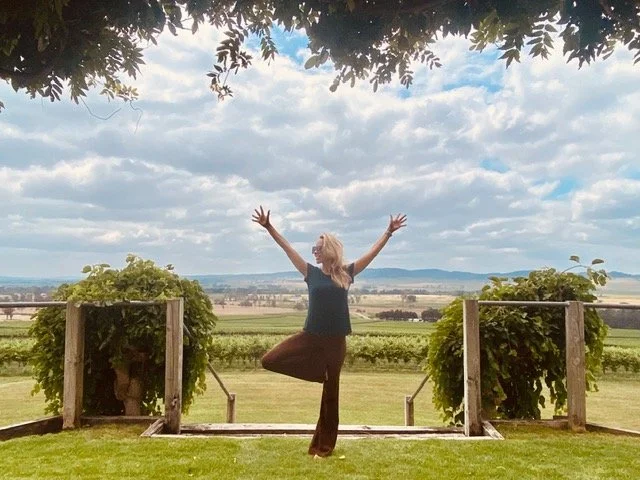
Vin Yin Yoga - Tree Pose, Hunter Valley
